
For decades, the global conversation around urban dynamism centered on the steel-and-glass skylines of New York, London, or Tokyo. However, in recent years, the spotlight has shifted decisively toward South Asia. Specifically, it has landed on Bangalore (officially Bengaluru), a city that has consistently topped global indices as the most dynamic urban center in the world.
Known as the Silicon Valley of India, Bangalore is far more than just a tech hub. It is a sprawling, high-energy metropolis where ancient traditions meet the cutting edge of human innovation. For travelers and digital nomads alike, it offers a glimpse into the future of urban living. Here is why Bangalore has earned its title and how you can experience its unique energy.
The Engine of Innovation: Why Bangalore Leads Globally
The term “dynamic” refers to a city’s ability to change, innovate, and adapt to evolving circumstances. According to the Jones Lang LaSalle (JLL) City Momentum Index, Bangalore has frequently outpaced even San Francisco and Shanghai in these categories.
The Startup Capital
Bangalore is the undisputed heart of India’s startup ecosystem. It is home to thousands of startups and a significant portion of India’s “unicorns” (companies valued at over $1 billion). This concentration of venture capital and talent creates a palpable “can-do” atmosphere. Walking through the coworking spaces of HSR Layout or Indiranagar, you can practically feel the collective ambition of thousands of young entrepreneurs working to solve global problems through code and creativity.
A Global Tech Magnet
The city doesn’t just breed local startups; it attracts the biggest names in the world. Tech giants like Google, Microsoft, Amazon, and Apple have established massive campuses here. This has created a unique professional culture—a blend of global standards and local ingenuity that keeps the city’s economy in a state of constant motion.
A City of Contrasts: Gardens and Glass Houses
Despite its reputation as a futuristic tech city, Bangalore has deep roots that date back to the 16th century. It was originally known as the “Garden City of India,” a title that still holds true in its lush, green pockets.
The Lungs of the City: Cubbon Park and Lalbagh
In the heart of the city’s traffic and bustle lies Cubbon Park, a 300-acre oasis of bamboo groves and flowering trees. It serves as the city’s communal backyard, where joggers, musicians, and yoga enthusiasts gather every morning. Similarly, the Lalbagh Botanical Garden, commissioned in 1760, features a magnificent glass house modeled after London’s Crystal Palace. These spaces provide a necessary counterweight to the rapid pace of the surrounding city.
Architectural Heritage
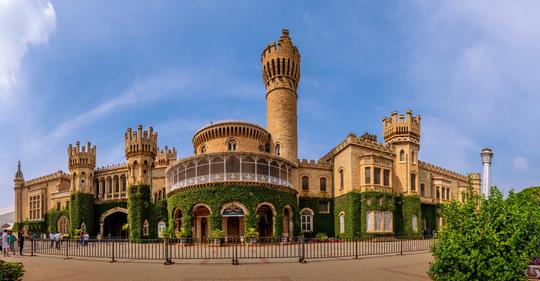
The Bangalore Palace, inspired by Windsor Castle in England, offers a stunning example of Tudor-style architecture in the middle of India. Meanwhile, the Vidhana Soudha, the seat of the state legislature, stands as a magnificent example of Neo-Dravidian style. These landmarks serve as reminders that before it was a hub for semiconductors, Bangalore was a city of royalty and rich colonial history.
The Bangalorean Lifestyle: Pubs, Coffee, and Culture
If the economy is the engine of Bangalore, its social scene is the soul. The city has developed a distinct lifestyle that is arguably the most liberal and cosmopolitan in India.
The Pub Capital of India
Bangalore is famous for its craft brewery culture. It was the first city in India to embrace microbreweries, and today, neighborhoods like Koramangala and Lavelle Road are packed with establishments serving world-class IPAs and stouts. The “pub crawl” is a local tradition, providing a relaxed environment where the city’s diverse population—from old-school residents to new migrants—comes together.
The Filter Coffee Ritual
While craft beer is the king of the evening, “Filter Kaapi” is the ruler of the morning. Bangaloreans take their coffee seriously. A visit to a traditional “Darshini” (local vegetarian eatery) for a frothy cup of chicory-infused coffee and a plate of crispy Masala Dosa is a non-negotiable part of the local experience. It is a ritual that transcends class and profession, grounding the fast-moving city in a comforting, shared tradition.
Navigating the Dynamic Chaos: Tips for Visitors
Being the most dynamic city in the world comes with a well-known side effect: legendary traffic. However, with a little strategy, you can navigate the city like a local.
- Embrace the Metro: The “Namma Metro” is clean, efficient, and expanding rapidly. It is the best way to bypass the congested roads during peak hours.
- Stay Centrally: If you are visiting for leisure, try to stay in areas like Indiranagar, MG Road, or Lavelle Road. These areas are walkable and contain a high density of the city’s best cafes, parks, and shops.
- Climate Advantage: One of Bangalore’s greatest assets is its weather. Situated on a plateau 3,000 feet above sea level, it enjoys a pleasant, spring-like climate for most of the year, making outdoor exploration much more enjoyable than in the sweltering coastal cities.
Conclusion
Bangalore is a city that never stops reinventing itself. It is a place where a 400-year-old temple can sit comfortably next to a multi-billion dollar AI research center. This fusion of history and future, nature and technology, tradition and rebellion is what makes it the most dynamic city in the world. To visit Bangalore is to see India at its most ambitious and energetic—a city that is not just participating in the 21st century but actively helping to define it.